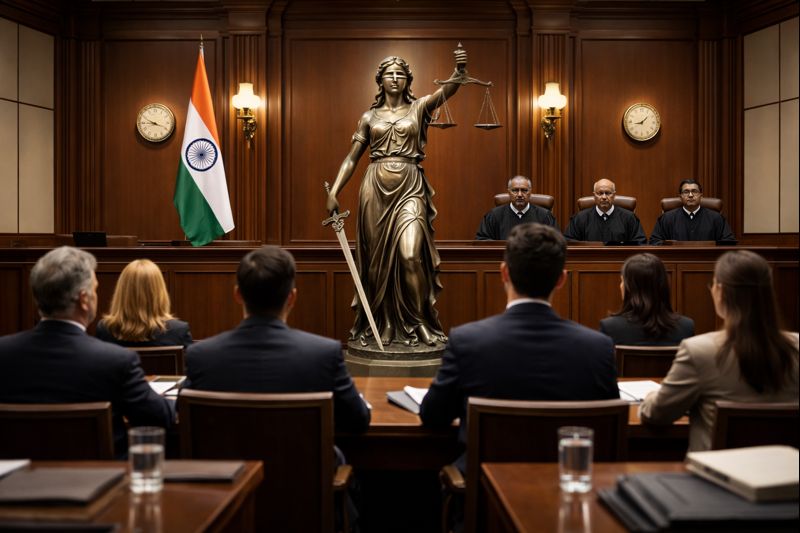
Civil law procedure in India is often misunderstood as slow, technical, and paperwork-driven. Many people associate it only with long court battles over property, contracts, or family disputes.But behind every civil case lies a deeply human conflict—a broken promise, a disputed right, a financial loss, or a struggle for dignity. Civil law procedure exists not merely to resolve disputes, but to do so fairly, patiently, and with respect for human relationships.
The backbone of civil litigation in India is the Code of Civil Procedure, which provides a structured path for resolving disputes through courts. Unlike criminal law, civil law does not seek punishment. Its purpose is restoration—of rights, obligations, and balance.
When a Civil Dispute Begins: More Than a Legal Issue
Civil disputes rarely start in court. They begin in everyday life—a landlord and tenant disagree, a business contract is breached, a family property is contested, or payment for work is withheld. At this stage, people are not thinking about sections or procedures; they are thinking about loss, betrayal, and uncertainty.
Civil law procedure steps in when dialogue fails. It gives individuals a peaceful, lawful way to assert their rights instead of taking matters into their own hands. In that sense, civil law is society’s way of transforming conflict into conversation.
The Plaint: Telling One’s Story to the Court
A civil case formally begins with the filing of a plaint. While legally structured, the plaint is essentially a person’s story—what went wrong, how it caused harm, and why the court’s intervention is needed. Civil procedure insists on clarity, facts, and supporting documents, not to burden the litigant, but to ensure fairness to the opposite party.
This stage reflects a core human value of civil law: everyone deserves to be heard, but no one should be taken by surprise.
Summons and Written Statement: The Right to Respond
Once a case is filed, the opposite party is given a chance to respond through a written statement. This is where civil law procedure demonstrates balance. It does not assume one side is right and the other wrong. Instead, it creates a space where both narratives coexist until tested through evidence.
From a human perspective, this stage reduces hostility. It reminds parties that disputes are resolved not by dominance, but by dialogue under law.
Evidence and Trial: Patience as a Legal Virtue
Civil trials are often criticised for delays, but their structure serves a purpose. Documents are examined, witnesses are questioned, and facts are verified carefully. Unlike criminal trials, emotions here are subtler but no less intense—years of savings, family harmony, or professional reputation may be at stake.
Civil law procedure values patience because rushed justice can permanently damage lives and relationships. The law understands that truth in civil disputes often lies in details, not drama.
Interim Relief: Immediate Human Concerns
One of the most humane aspects of civil law procedure is interim relief—temporary injunctions, stay orders, or interim maintenance. These remedies recognise that justice delayed without protection can become justice denied.
Whether it is stopping the sale of disputed property or ensuring financial support during litigation, interim orders show that civil law responds to real-time human needs, not just final outcomes.
Judgment and Decree: Restoring Balance
A civil judgment does not declare someone a criminal. It determines rights and liabilities. The decree that follows is meant to restore balance—by enforcing a contract, protecting possession, or awarding compensation.
Even after judgment, civil law remains humane. Appeals are permitted because the system acknowledges that courts, like people, can err. Execution proceedings are regulated so that enforcement does not become oppression.
Why Civil Law Procedure Matters to Society
Civil law procedure quietly maintains social order. It resolves disputes without violence, channels conflict into lawful processes, and reinforces trust in institutions. Most importantly, it teaches society that rights come with responsibilities.
Every property dispute settled, every contract enforced, and every injunction granted prevents deeper social conflict. Civil law is not loud, but it is foundational.
Conclusion
Civil law procedure in India is not merely a set of rules—it is a system built around human relationships, rights, and responsibilities. It recognises that disputes are inevitable, but injustice is not. By providing a fair, structured, and compassionate process, civil law ensures that disagreements end not in bitterness, but in resolution.
Understanding civil law procedure is not just legal knowledge; it is an understanding of how society chooses order over chaos and justice over force.